
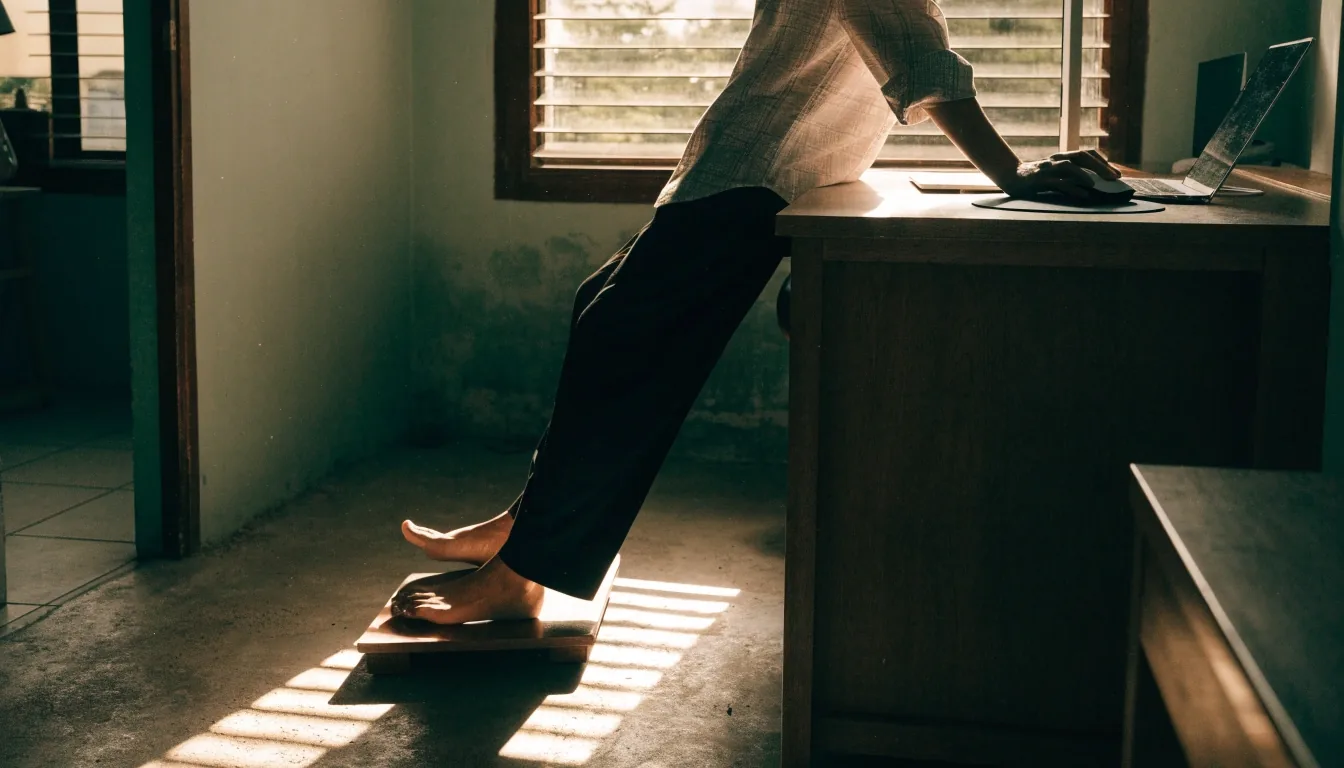
About PrimeShift Ergonomics
Guidance written for desks that actually exist here
PrimeShift Ergonomics publishes practical workplace ergonomics guidance for office, remote, and hybrid workers in Indonesia. We write about workstation setup, kinetic mobility, and posture balance, and we keep the advice usable with equipment that is actually available here.
Written and reviewed in Jakarta, for people who work at a desk here.
Published by the PrimeShift editorial desk · Kuningan, Jakarta Selatan
What this site covers
Our scope is desk-based work: monitor height, keyboard placement, chair adjustment, sit-stand routines, movement during the day, and the accessories that support those things. Those five areas cover most of what a person can change at their own workstation, with or without permission from an employer.
We stay away from medical claims, treatment advice, and fitness framing. A desk adjustment changes how load sits on your body over a working day. It does not treat a condition, and it does not replace care from a clinician. If a topic sits outside ergonomics, we leave it to sources that handle it properly rather than stretching our own pages to cover it.
Ergonomics advice works best when it stays honest about what a desk adjustment can and cannot do.
Our editorial stance, and the reason some of these pages stay short.

Who writes the guidance
Content is produced by our editorial team in Jakarta and reviewed against published workplace ergonomics principles before publication.
We do not present ourselves as clinicians, and we do not publish content under invented expert identities. Where a recommendation depends on individual factors such as body proportions or desk dimensions, we say so rather than offering a single universal number. A monitor height that works for a 180 cm reader sitting in a deep chair is not the same number that works for someone at 155 cm on a shallow bench.
That approach makes some pages read slower than a list of fixed measurements would. It also means you can check our advice against your own body and your own desk instead of trusting a figure that was measured somewhere else. When two of our pages touch the same topic, the numbers agree with each other.
How we research
Starting from established guidance
We draw on established workplace ergonomics guidance and standard setup principles, then adapt them for Indonesian work conditions: smaller home spaces, shared coworking desks, split office and home weeks, and air-conditioned offices where people move less than they realise. We do not cite sources inside reader-facing pages, and we do not reuse claims from other websites without checking them against the underlying guidance first.
Adapting it to how people work here
A workstation in a Jakarta apartment often shares a room with a bed, a kitchen counter, or a dining table, and the chair may be whatever was already there. That changes which adjustment matters first. We describe the adjustment sequence that works in a shared room, and we name the pieces that are genuinely worth buying instead of assuming a full equipment budget.
What we won't publish
These restrictions make some pages less dramatic, and that is deliberate.
- Statistics No invented numbers, percentages, or score cards Refused
- Quotes No borrowed testimonials or unnamed praise Refused
- Comparisons No before-and-after claims about posture or pain Refused
- Promises No claim that a setup change resolves a health problem Refused
If you are looking for a page that promises a posture fix, we are not the site for that. If you want to know which adjustment to try first with the desk you have, this is where that conversation starts.
How often content is updated
When we review
We revisit pages when the underlying guidance changes or when reader questions reveal a gap. Setup fundamentals shift slowly, so many pages stay stable for long periods without needing a rewrite.
How we revise
When we do revise a page, we revise the substance rather than adding new paragraphs around the old ones. If a section no longer reflects current guidance, we would rather correct it than leave it standing beside the newer text.
What stays put
Monitors at eye level, feet supported, elbows near ninety degrees, movement through the day: these have held for years and are unlikely to change. Pages built on them remain useful as written.
Reader questions shape the site
Many of our pages started as reader questions: how high a monitor should be, whether footrests help while standing, how long to stand before sitting again. If a question comes up repeatedly and we can answer it factually, it becomes a section or a page. You can send topic requests through the contact page.
Send us a topic requestHow high should my monitor sit? Open
The top of the screen should land near your eye level when you sit naturally, not when you straighten up to check. That usually means raising the screen rather than lowering your chair, because the chair height is set by your feet reaching the floor. If you wear progressive lenses, the number shifts and we say so on the setup page.
Do footrests help while standing? Open
A footrest is a seated tool, not a standing one. What helps at a standing desk is a bar or a small step that lets you shift weight from one leg to the other through the day. We explain the difference on the sit-stand page rather than bundling both into one purchase.
How long should I stand before sitting again? Open
There is no single interval that fits everyone, and we will not pretend there is. What we describe instead is a rhythm you can actually keep: alternate before discomfort builds, and treat the alternation itself as the useful habit rather than the exact number of minutes.
Can you recommend a specific chair or desk? Open
We describe what a piece of equipment needs to do so you can judge the model in front of you. We do not sell equipment, and we do not take payment for recommending specific products. That keeps the advice about the setup problem rather than about a commercial relationship.
What we're not
We are not a clinic, a furniture retailer, or a workplace assessment service. We do not sell equipment and we do not take payment for recommending specific products. When we describe a tool, it is because it addresses a setup problem, not because of a commercial relationship. That distinction matters more than it sounds: it means a recommendation can end with "this may not be worth buying for your desk."
If you need a formal workplace assessment or a clinical opinion, we can point you toward the kind of provider who does that work. We cannot do it for you, and we would rather say that plainly than stretch an ergonomics article into something it is not.
Our location and how to reach us
For questions about a specific page, mentioning the page helps us route it to the right person on the editorial desk.
Start with the setup you already have
The workstation setup guide walks through monitor height, keyboard placement, chair adjustment, and the order to change them in. The sit-stand and movement pages cover what to do across a working day, and the posture and mobility basics explain the movement habit behind both. If something you want covered is missing, ask us.
PrimeShift Ergonomics writes about workstation setup, kinetic mobility, and posture balance for people working in Indonesia. Published from Kuningan, Jakarta Selatan.